

STEP-BY-STEP TEACHER GUIDE
Step-by-step teacher guide
The PodCastle Step-by-Step Teacher Guide is a practical resource for teachers and cultural operators working with children.
It combines a theoretical framework with clear guidance to support the implementation, replication, and further development of the project’s activities.
1. Theoretical Framework and Introduction to the Guide
Click on the picture to see the document
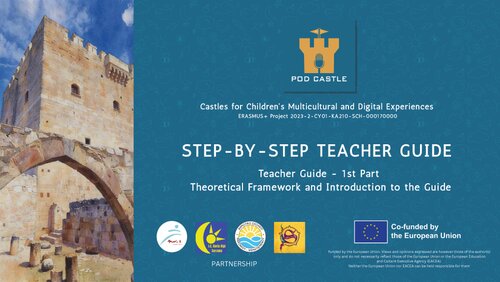
This initial section provides the conceptual foundations underpinning the PodCastle project. It outlines the key pedagogical principles,
including multiple intelligences, intercultural education, and digital competence.
It also introduces the objectives of the guide and situates the project within broader educational priorities,
offering teachers a clear understanding of the rationale guiding the proposed activities.
Click on the PDF to download the document

2. Organising Activities In and Outside the Classroom: Learning Paths for Podcast Content Creation
Click on the picture to see the document
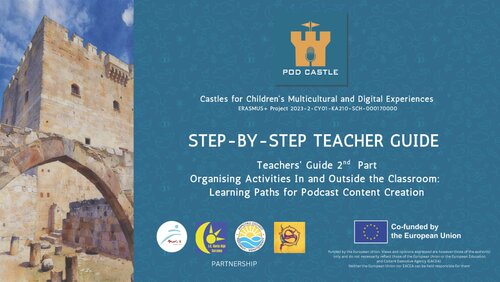
The second part presents ideas that guide teachers in designing and implementing activities both within and beyond the classroom setting.
It emphasizes experiential and place-based learning, particularly through visits to cultural heritage sites such as castles.
This section supports educators in facilitating research, observation, and creative exploration,
enabling students to gather content that will later be developed into podcasts
Click on the PDF to download the document
3. How to Create Podcasts with Primary School Children
Click on the picture to see the document
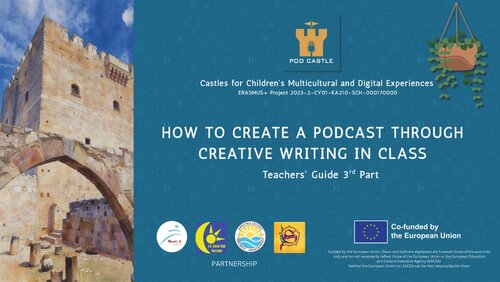
This section offers practical, step-by-step guidance on podcast production tailored to primary education.
It covers key stages such as idea development, scriptwriting, narration, recording, and basic editing.
The focus is on accessibility and inclusivity, ensuring that teachers with varying levels
of digital expertise can effectively support students in producing meaningful audio content.
Click on the PDF to download the document
4. Evaluation Tools and Teacher Development:
Questionnaires and Workshop Ideas
Click on the picture to see the document
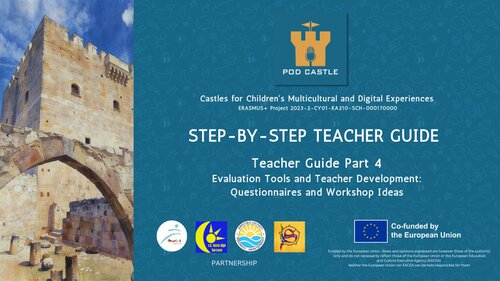
The fourth part provides tools for assessing the impact of classroom activities,
including questionnaires designed to capture student engagement, learning outcomes, and overall experience.
In addition, it offers suggestions for teacher workshops aimed at professional development,
encouraging reflection, exchange of practices, and the strengthening of pedagogical competences.
Click on the PDF to download the document
5. Activity Pack for Children
Click on the picture to see the document
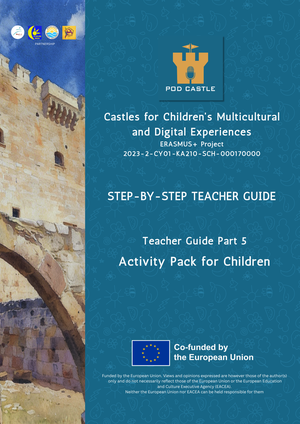
The final section consists of a practical activity pack for students, including templates and
worksheets to be used during site visits and classroom activities.
These materials are designed to support observation, note-taking, and creative input,
helping children to document their experiences and ideas.
The activity pack plays a key role in scaffolding the learning process and facilitating the transition from exploration to content creation.
Click on the PDF to download the document